



Location: ... / Seven Central Facilities / CCC

Silja Häme
Institute for Atmospheric and Earth System Research (INAR) / Physics
P.O. Box 64
FI-00014 University of Helsinki
Finland
Cluster Calibration Center (CCC)
CCC is hosted by Institute for Atmospheric and Earth System Research (INAR), University of Helsinki, Finland. The CCC facilities are located in Helsinki, Kumpula campus. INAR has over 30 years of experience of developing aerosol instrumentation, especially for sub 10 nm aerosol particle detection.
CCC is leading, managing and coordinating activities on sub-10 nm particle measurements (particle number concentration and size distribution). CCC provides operation support to ACTRIS National Facilities and services to other users in sub-10 nm particle measurements. The instruments we support/service include ion spectrometer, NAIS; particle size magnifier, PSM (nano-condensation Nucleus counter, nCNC consisting of a PSM and a CPC) and nano-mobility particle size spectrometers, nano-MPSS (optimized for 10 nm size distribution measurements).
CCC provides training and consultancy on sub-10 nm measurements (e.g., training as part of our intercomparison workshops, lectures), measurement and data procedures and tools (e.g., SOPs for nanoparticle measurement instruments and QA/QC tools for sub-10 nm measurement data) and measurement monitoring (e.g., instrument intercomparison workshops for nanoparticle instruments, data quality evaluation). CCC has also an active role in nanoparticle measurement method and instrument development.
Visit the ACTRIS Finland website: https://www.helsinki.fi/en/infrastructures/actris-finland
 Workshop Activities
nCNC (nano-Condensation Nucleus Counter)
The nCNC system consists of a Particle Size Magnifier (PSM) followed by a Condensation Particle Counter (CPC). The workshop begins with an evaluation of the instrument condition. If necessary, maintenance and troubleshooting are performed before calibration. Calibration comprises two steps: (1) determining the CPC concentration response against a reference instrument, and (2) measuring the response of the complete nCNC system as a function of saturator flow rate for selected particle diameters. Tungsten oxide (WOx) particles generated by a hot-wire source are used for calibration. For CPC calibration, larger singly charged particles are produced by condensational growth of WOx seed particles using di-ethylhexyl sebacate (DEHS). The particles are size-selected with a calibrated high-resolution differential mobility analyzer (DMA), and number concentration is determined using a calibrated aerosol electrometer as the reference. The workshop also includes training on instrument operation and data evaluation.
Silja HämeJanne LampilahtiContact: actris-ccc[at]helsinki.fi
NAIS (Neutral cluster and Air Ion Spectrometer)
The workshop begins with an assessment of the instrument condition, including verification of electrometer noise levels, flow sensor calibration, DMA voltages, and potential air leaks. If necessary, basic maintenance and troubleshooting are performed. Sizing and detection efficiencies in both ion and particle modes are then determined for selected particle diameters. The calibration setup is the same as used for PSM calibration, with the addition of a dedicated dilution inlet to accommodate the higher flow rate of the NAIS. For particle mode calibration, a CPC is used as the reference counter, as the aerosol must be neutralized. The workshop also includes training on instrument operation and data evaluation.
Silja HämeJanne LampilahtiContact: actris-ccc[at]helsinki.fi
Nano-MPSS (nano-Mobility Particle Size Spectrometer)
The workshop begins with an assessment of the instrument condition, including verification of key operating parameters. If required, troubleshooting and basic maintenance are carried out prior to calibration. The counting efficiency of the nano-CPC and the sizing performance of the DMA are then evaluated using the calibration setup (identical to that used for PSM calibration). To verify overall system performance, an intercomparison with a reference nano-MPSS system is performed using aerosol particles generated by the hot-wire particle source. The workshop also includes training on instrument operation and data analysis.
Silja HämeJanne LampilahtiContact: actris-ccc[at]helsinki.fi
 Gallery
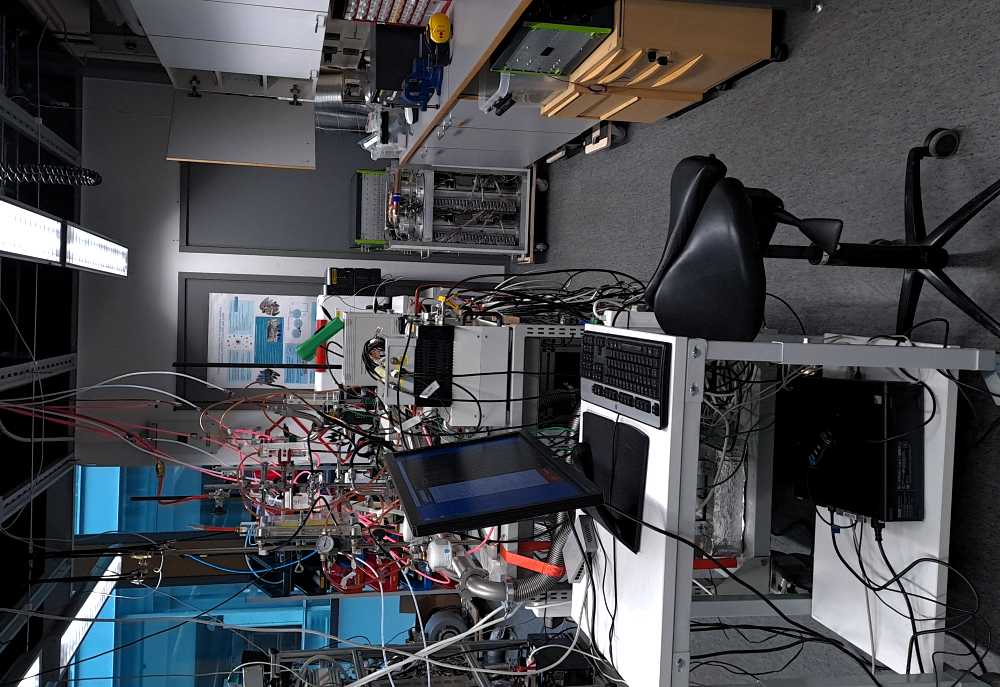


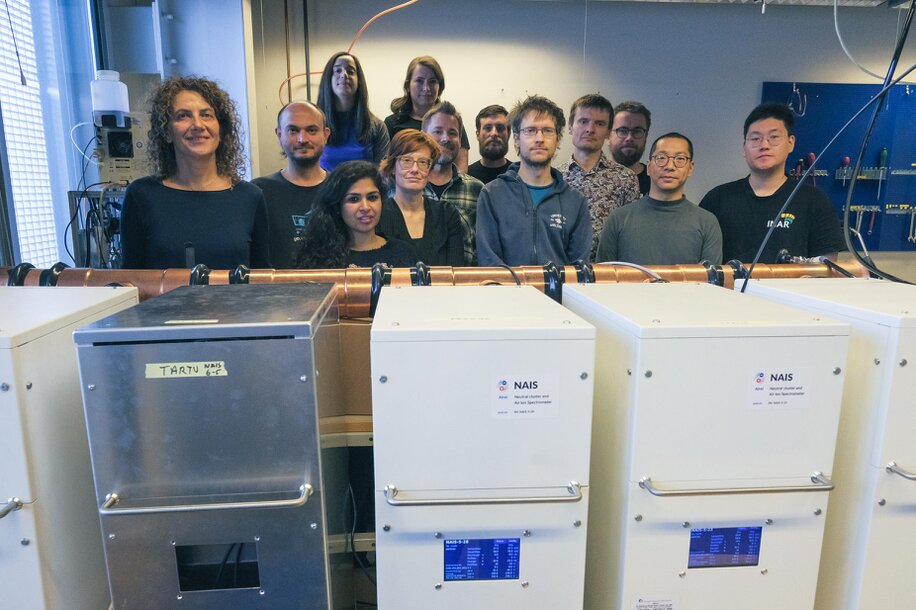
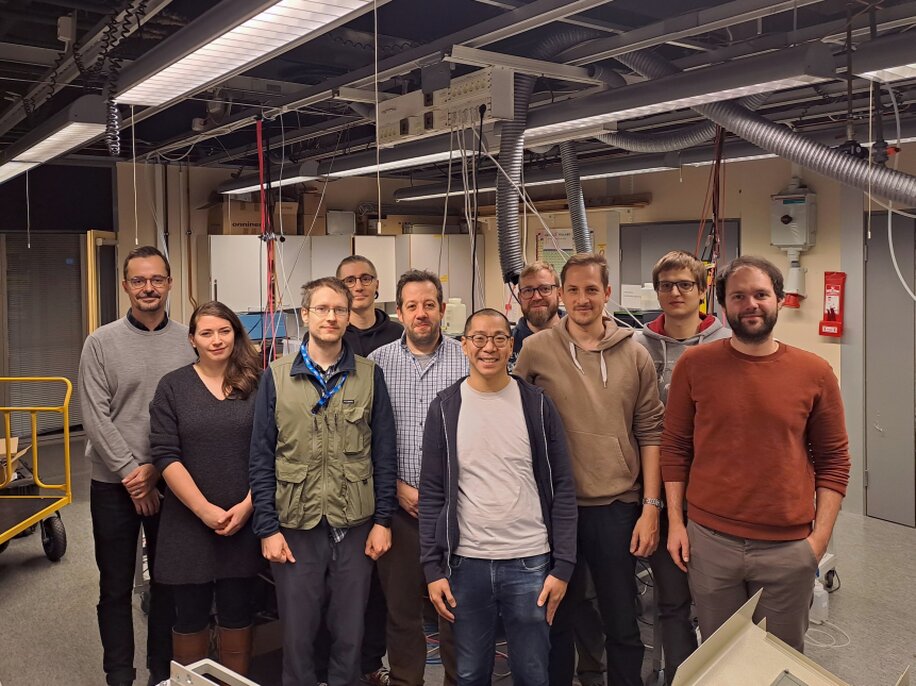
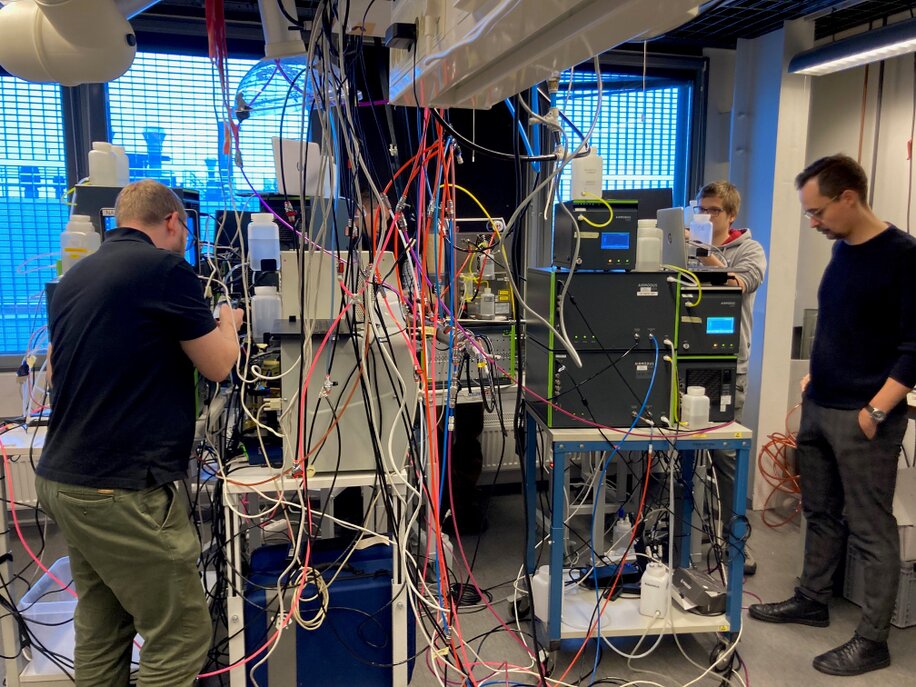
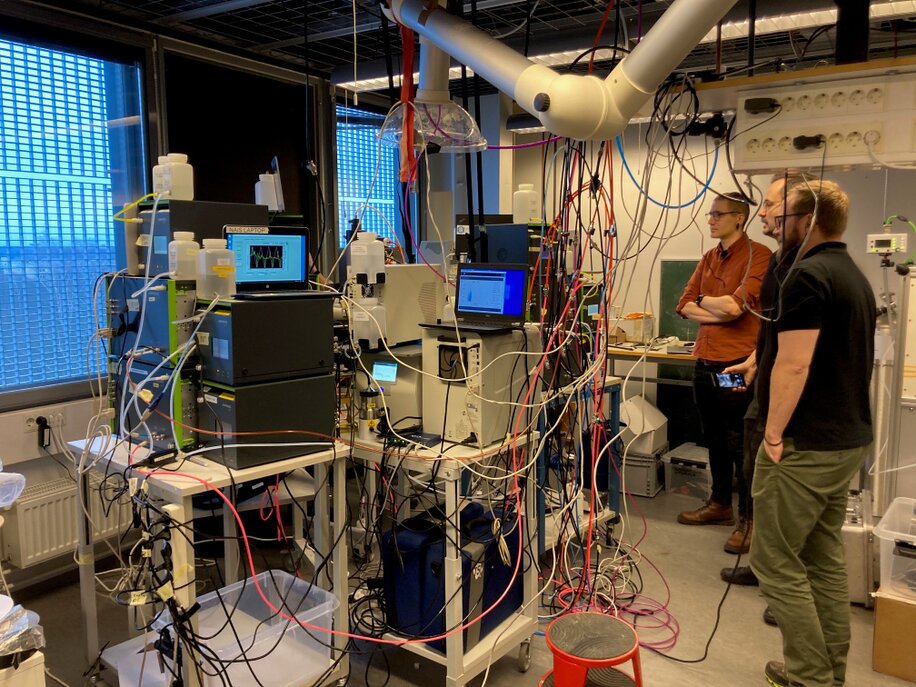
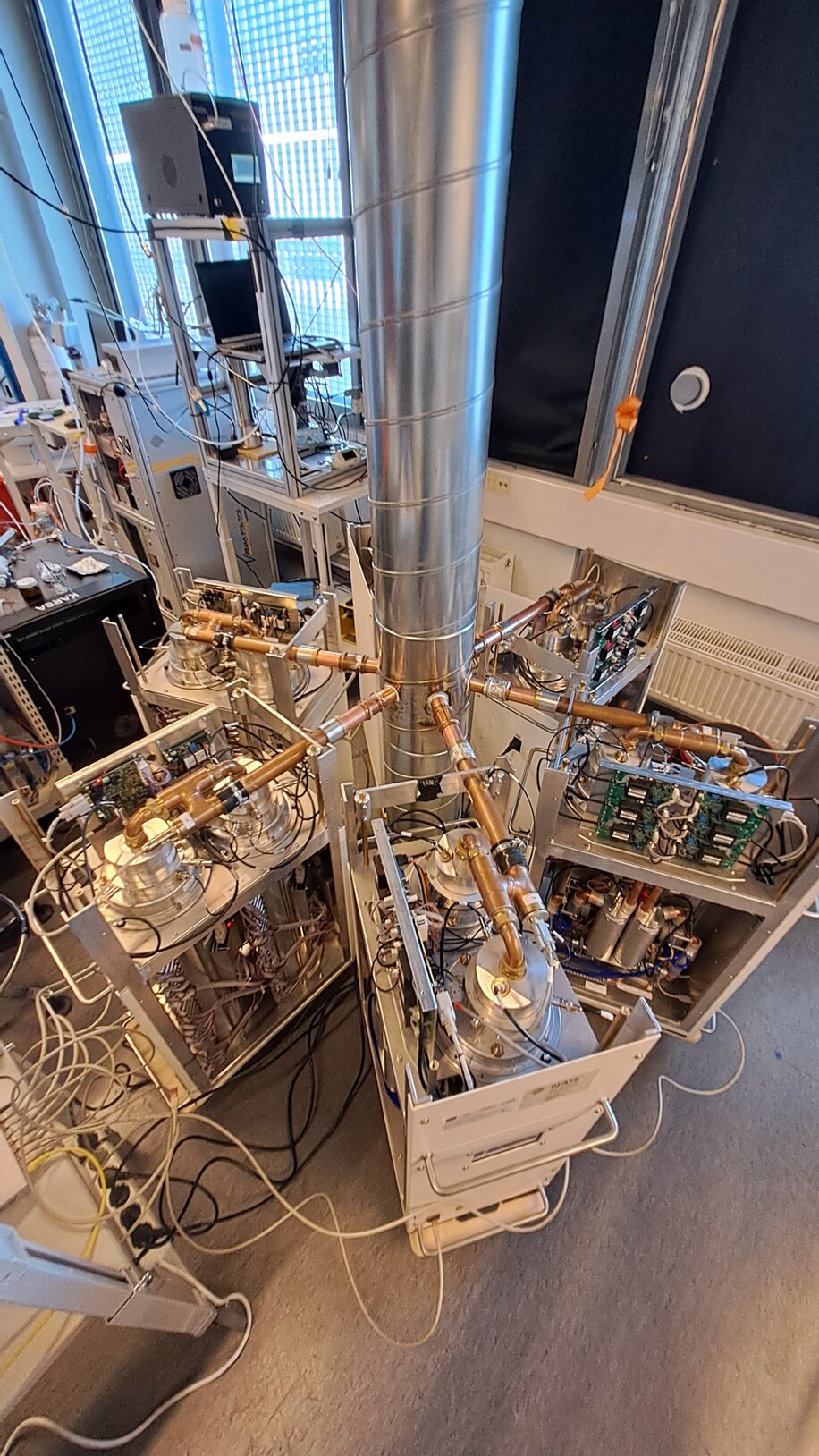
 Procedure for Calibration Workshop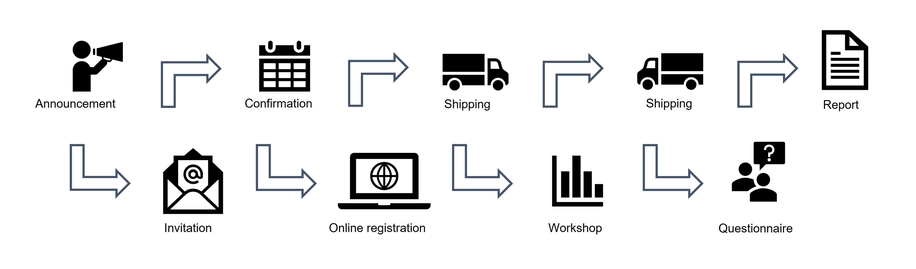
 Workshop Schedule
During the year the CCC offers different ACTRIS-Workshops for the National Facilities (NF). The workshops are split over the whole year and contains nCNC (nano-Condensation Nucleus Counter), NAIS (Neutral cluster and Air Ion Spectrometer), and Nano-MPSS (nano-Mobility Particle Size Spectrometer). The workshop schedule is frequently updated and shows the invited participants during the workshops. In the second half of the actual year we announce the workshop schedule of the upcoming year. The following calendar shows the planed workshop weeks during the year.

 Online Registration
 Questionnaire
 Flyer
Flyer